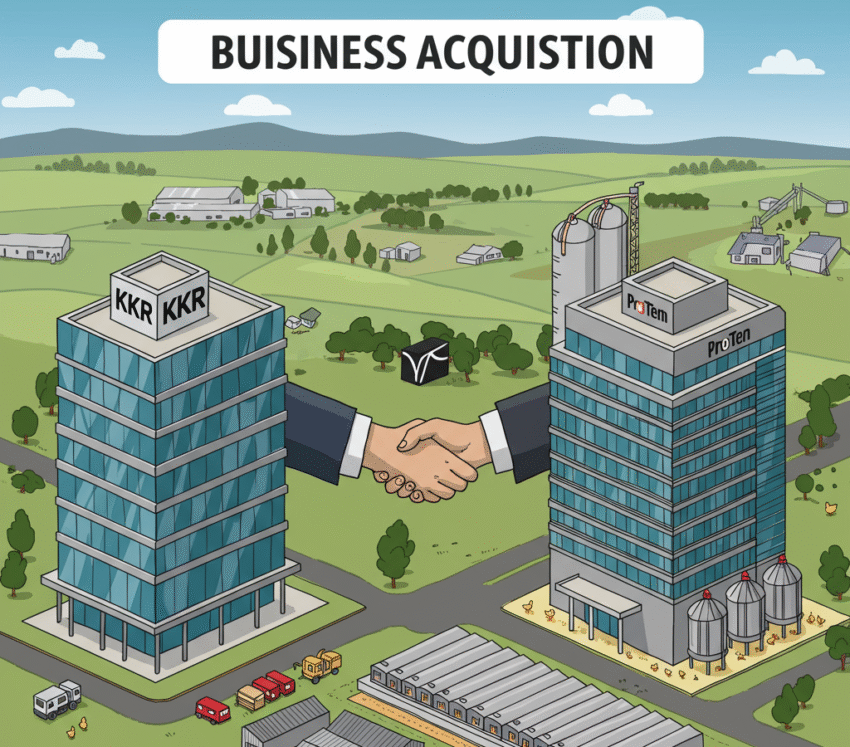
KKR Makes Big Move in Australia: What the ProTen Acquisition Means
Have you ever wondered who’s behind the chicken on your plate? While we usually focus on taste and nutrition, there’s a lot going on behind the scenes to bring poultry to our tables—huge investments, infrastructure, and strategic decisions. One recent example is the giant investment firm KKR stepping into Australia’s poultry farming game by acquiring a company you’ve probably never heard of: ProTen. But don’t worry, we’ll break it all down in a way that’s easy to digest.
So, Who Are the Players Here?
Let’s start by getting to know the big names involved in this story:
- KKR: A global investment firm known for buying businesses, improving them, and often selling them later for a profit.
- ProTen: Australia’s largest poultry infrastructure company. Basically, they build and manage the chicken farms that supply big producers like Inghams, which is Australia’s leading poultry company.
- Aware Super: One of Australia’s largest superannuation (pension) funds. They’ve held a majority stake in ProTen since 2018.
In a recent announcement, KKR confirmed it will be acquiring ProTen from Aware Super for an undisclosed sum. That’s right, the price tag hasn’t been officially shared, but experts suggest it’s somewhere in the billions.
Why Did KKR Buy ProTen?
At first glance, this might sound like a strange match. Why would a global investment powerhouse want to own chicken farms in Australia?
The answer boils down to three main reasons:
- Steady Demand: People will always need to eat, and chicken is one of the most consumed proteins worldwide—especially in Australia.
- Stable Returns: Farming infrastructure can provide dependable, long-term income.
- Growth Potential: Australian agriculture is booming, and investing in its backbone—the infrastructure—can be a smart long-term bet.
Plus, ProTen holds a strong position in the market. They manage over 640 chicken sheds across the country, with most of their operations supporting Inghams, a major player in poultry processing and distribution.
What Does ProTen Actually Do?
Imagine this: You’re a major chicken producer, but instead of building and managing dozens of farms, you lease them. That’s where ProTen steps in. They invest in farm infrastructure and lease it to companies like Inghams, which handle the feeding and harvesting of chickens.
ProTen’s business is less about raising chickens and more about owning the real estate and equipment that makes it all possible. Think of them as the landlords of the poultry world.
ProTen at a Glance
| Aspect | Details |
|---|---|
| Founded | Late 1990s |
| Operations | Over 640 poultry sheds nationwide |
| Main Client | Inghams |
| Ownership Before KKR | Aware Super, via private equity firm Roc Partners |
How Does This Deal Fit into KKR’s Bigger Picture?
This isn’t KKR’s first rodeo in Australia’s agriculture or infrastructure sectors. Recently, the firm has invested heavily in energy (like Spark Infrastructure) and real estate. By adding ProTen to its portfolio, KKR continues to build a diverse base in essential services.
From farming equipment to energy grids, KKR is betting big on “real assets”—things that people rely on every day but that often fly under the radar. And with the global population still rising and food demands increasing, it’s a smart move into food production infrastructure.
What Does This Mean for You and Me?
You might be thinking, “Okay, but how does this affect my grocery bill or the chicken I eat on weekends?”
In the short term, not much will change for everyday consumers. However, over time, strong investment can mean better technology, more efficient farming, and potentially more stable prices. With a provider like KKR backing ProTen, we might even see more innovation in farm sustainability or animal welfare standards.
Also—since food security has become a hot topic in recent years—companies like KKR investing in supply chains could help make food systems more resilient in the face of global shocks like pandemics or climate change.
A Closer Look at Aware Super’s Exit
So, why is Aware Super walking away from this deal?
The fund had been invested in ProTen since 2018. Over five years later, it looks like they’ve achieved their goals. Aware Super stated that the sale aligns with their mission to deliver “strong sustainable returns” for their members.
In investing, it’s not just about buying the right asset—it’s also about knowing when to sell. Now, they’re cashing out, possibly with substantial profits, and redirecting funds to other opportunities.
Where Does This Leave the Poultry Industry?
In a pretty solid place, actually. Deals like this generally boost the confidence of the industry and attract even more investment. It shows faith in the future of sustainable and scalable food infrastructure.
Think of it as a vote of confidence: if a major global player like KKR is getting into poultry farming infrastructure, it’s a strong signal that this sector has real staying power.
Final Thoughts
At the end of the day, this may be a behind-the-scenes deal, but it reflects a broader trend that we’re seeing worldwide—big investors are looking to food, farming, and infrastructure to support a changing world.
For consumers, it’s a reminder that our food system is incredibly complex and constantly evolving. For investors, it’s another sign that essential industries like agriculture still offer solid opportunities.
So the next time you’re buying chicken at the supermarket, remember—there’s a web of strategic moves, investments, and infrastructure that help put that dinner on your plate.
Key Takeaways:
- KKR is acquiring ProTen, Australia’s leading poultry infrastructure firm.
- ProTen isn’t a chicken producer but rather the owner of the facilities that large producers use.
- This move reflects growing interest from investors in agricultural infrastructure.
- Aware Super is handing off the reins after a successful five-year investment.
- Long-term effects could include more efficient and sustainable poultry farming across Australia.
What do you think about large investment firms stepping into agriculture? Smart move—or should food be left to farmers, not financiers? Let us know your thoughts in the comments below!