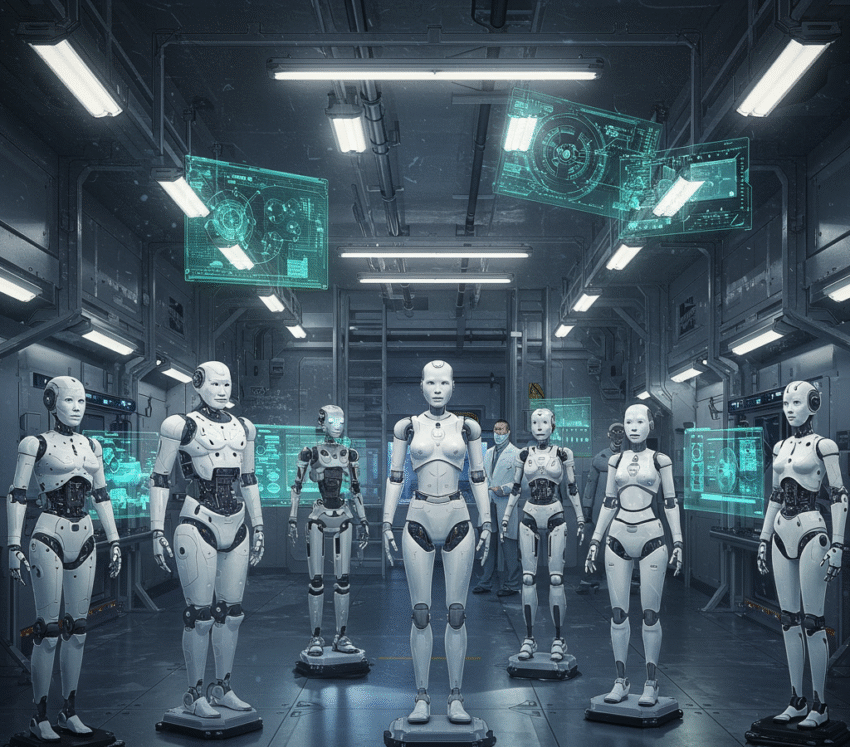
The Future Is Here: 9 Humanoid Robot Companies You Should Know About
Have you ever dreamed of a world where robots walk among us—not just in factories, but in our homes, offices, and even hospitals? That future is not as far off as you might think. Humanoid robots, machines built to look and act like people, are no longer just science fiction. In fact, several cutting-edge companies are working right now to make smart, lifelike robots a part of our everyday lives.
From helping the elderly to welcoming guests in public spaces, these humanoid robots are being built with advanced AI, agile bodies, and, in some cases, even facial expressions that mimic ours. Sounds fascinating, right?
Let’s explore nine private companies that are leading the charge and shaping the future of humanoid robotics.
Why Humanoid Robots?
Before we dive into the companies, you might be wondering—why make robots that resemble humans at all? Well, here’s the thing: our world is designed for people. Doors, stairs, kitchens, workspaces—everything is built for two-legged, two-armed beings. So when a robot is human-like, it can step right into those spaces without needing everything to be redesigned.
Plus, there’s something psychologically comforting about interacting with a robot that looks and reacts like a person. It makes the experience smoother, especially in environments like childcare, eldercare, and customer service.
Meet the Robots: 9 Companies Shaping the Future
Here are nine private companies that are quietly (and some not so quietly) transforming robotics into something out of a sci-fi movie:
| Company Name | Location | Flagship Robot | Key Features |
|---|---|---|---|
| Figure AI | Sunnyvale, California | Figure 01 | Full-body mobility, AI-driven learning, built to do labor-intensive work like warehouse picking |
| 1X Technologies | Norway | EVE | Wheel-less walking robot focused on worker co-piloting and cooperation |
| Sanctuary AI | Canada | Phoenix | Human-like movements, advanced sensor technology, cloud-based learning |
| Fourier Intelligence | China and Singapore | GR-1 | Primarily focused on rehab and healthcare, 165cm tall, capable of carrying heavy objects |
| Agility Robotics | Oregon, USA | Digit | Bipedal walking, warehouse automation, designed to work in human environments |
| Apptronik | Austin, Texas | Apollo | Swappable battery for 24/7 productivity, customizable arms, modular design |
| Neuralink (Honorable Mention) | California | Brain-robot interfaces | Not humanoid itself, but its tech could control robots via brain signals |
| Astrobotic’s subsidiary (Unnamed) | Pennsylvania, USA | Yet to launch humanoid product | Known for space robotics, now exploring humanoid applications |
| Pollen Robotics | France | Reachy | Open-source design, affordable and customizable, popular for research and education |
Which Robots Are Nearest to Seeing Real-World Use?
So, which of these are ready to step out of the lab and into real jobs? While most are still in development, some are closer than others:
- Digit (Agility Robotics): Already being tested in warehouses for logistics work.
- Apollo (Apptronik): Built specifically for industrial collaboration, with plans for wider rollout.
- GR-1 (Fourier Intelligence): Expected to be deployed in medical rehab centers and hospitals soon.
What Are the Robots Built to Do?
While they might all look humanoid, these robots serve different purposes. Some are built to move heavy items or load boxes, while others are meant to interact with people. A few will even assist in sensitive spaces like elderly care or education.
For example, Reachy from Pollen Robotics is open-source and designed for labs, schools, and research enthusiasts. It isn’t meant to lift heavy loads, but it’s perfect for learning how to program and interact with robots.
On the other end, you have Figure 01 by Figure AI, which is being developed to replace human labor in physically demanding or repetitive jobs—think stacking shelves or packing boxes in fulfillment centers.
What Makes These Robots “Humanoid”?
It’s not just about looking like a person. These robots are becoming more “human” in function too. Nearly all of them:
- Use artificial intelligence to learn and adapt
- Have sensors that help them “see” and navigate their surroundings
- Are built with arms, hands, and legs that mimic human motion
Some are even being designed to have facial expressions and language understanding capabilities, helping them interact more naturally with people.
The Role of AI in Humanoid Robotics
AI is the brain behind these bots. Imagine teaching a robot to pick up a coffee mug—you don’t just say “grab it.” A robot needs to understand where the mug is, what it is, how not to crush it, and where to put it next. That’s where advanced AI comes in.
Companies like Sanctuary AI and Figure AI are using powerful machine learning models, some of which are trained in the cloud using vast data sets from real-world human activities. That means these robots aren’t just built to obey commands—they can learn from watching us, just like a new employee would.
Is There a Real Need for Humanoid Robots?
Absolutely. As populations age and labor shortages grow in fields like logistics and healthcare, robots that can pitch in will be invaluable. They won’t replace humans completely, but they’ll make tough, repetitive, or dangerous jobs safer and easier.
Picture this: You’re working in a warehouse during the holiday rush. A humanoid robot helps move heavy boxes, follows you around as you pick orders, and even takes over when the shift gets too long. Think of it as a robotic teammate, not a replacement.
What’s Next for Humanoid Robots?
The future looks both exciting and a bit surreal. Many of the companies listed above are planning to roll out commercial models within the next few years. Some may target industries like:
- Healthcare and rehabilitation
- Warehousing and logistics
- Hospitality and front-desk support
- Education and robotics research
And as AI continues to improve and robot hardware gets cheaper, we might soon see humanoid assistants in our homes as well—folding laundry, cooking small meals, or keeping an eye on things when we’re not around.
Final Thoughts
Humanoid robots are no longer just a dream. With companies around the world racing to develop smart, capable, and people-friendly machines, the age of robotics is right at our doorstep. Whether you’re a tech enthusiast, a small business owner, or someone curious about the future of work, keeping an eye on these innovations is worth your time.
Who knows—your next coworker might just come with wires and a metallic smile!
Want to see these robots in action?
Check out videos from these companies to see how life-like and capable these bots have become. The future isn’t coming—it’s already walking.
Keywords: humanoid robots, AI robots, robotics companies, warehouse automation, future of work, tech innovation, artificial intelligence, robot helper, robot assistant